
Open Source Architecture: A New Paradigm
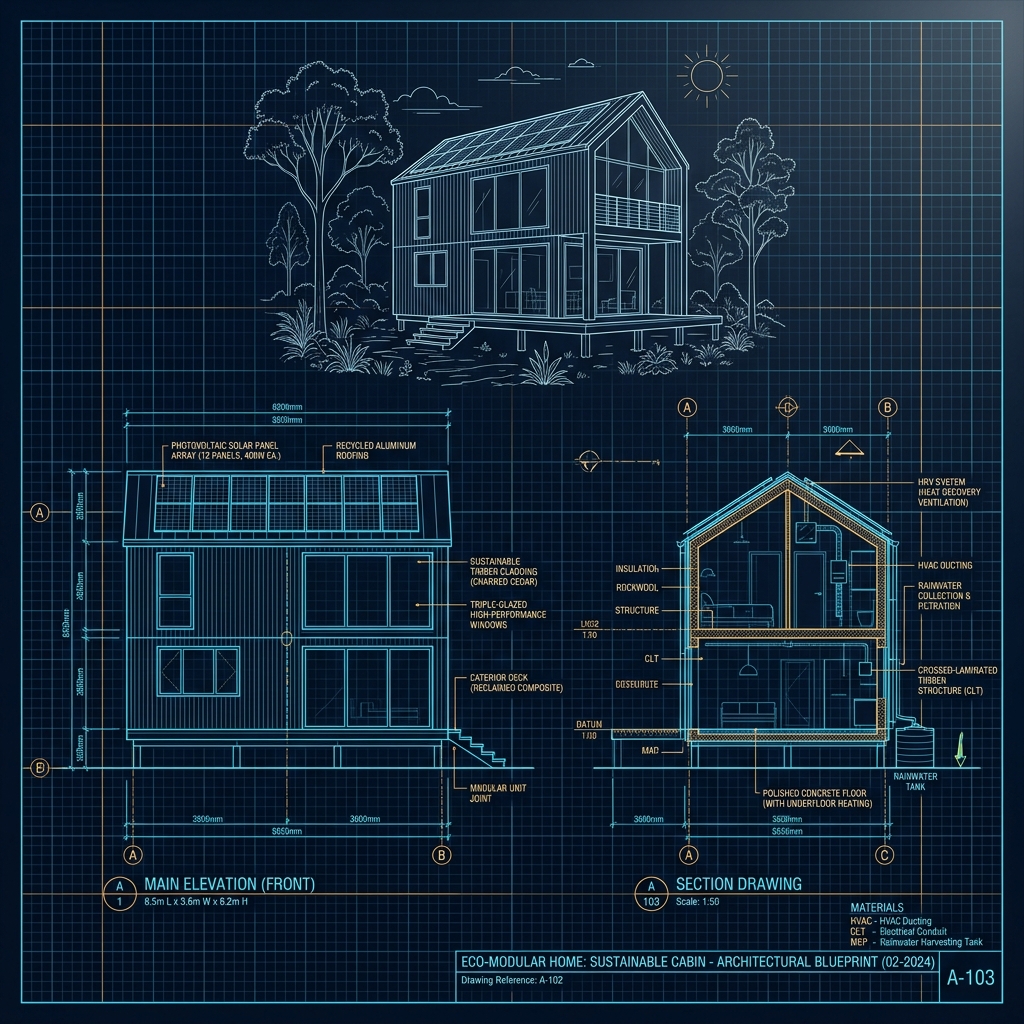
Why we believe that sharing our blueprints and formulas is crucial for solving the global housing crisis. Join the movement toward decentralized, sustainable living.
Architecture has long been a discipline of proprietary gatekeeping. For centuries, building designs, structural engineering parameters, and construction techniques have been locked behind expensive consulting fees, proprietary software formats, and commercial copyright. This closed-ecosystem approach has stiffened innovation, driven up construction costs, and isolated local communities from the very technologies required to build their own homes.
The global housing crisis, combined with the catastrophic carbon footprint of traditional concrete and steel construction, demands a different approach. We believe that sharing building plans and materials formulas is not just an ideological choice, but an urgent practical necessity. By democratizing access to high-performance, sustainable design blueprints, we can catalyze a decentralized, global movement for ecological shelter.
The Core Tenets of Open-Source Architecture
At its core, open-source architecture (OSA) is the practice of co-creating and sharing architectural design files, software, engineering parameters, and manufacturing instructions under public or open licenses. This shifts the role of the architect from a gatekeeper of static blueprints to a facilitator of dynamic, adaptable design systems.
We must build a digital global commons for physical infrastructure. Just as open-source software built the modern internet, open-source hardware and architecture will build the sustainable cities of tomorrow.
Git for Hardgoods: Version Control in Design
One of the most powerful concepts in OSA is translating software engineering practices into physical fabrication. Historically, CAD drawings were static, monolithic files. Collaborative platforms now allow designers to branch, modify, and merge physical design modules. An architect in Southern California can draft a structural wall framing component; a builder in Spain can branch that file, adapt the insulation core for cold-weather conditions, and push the revision back to the main repository for others to use.
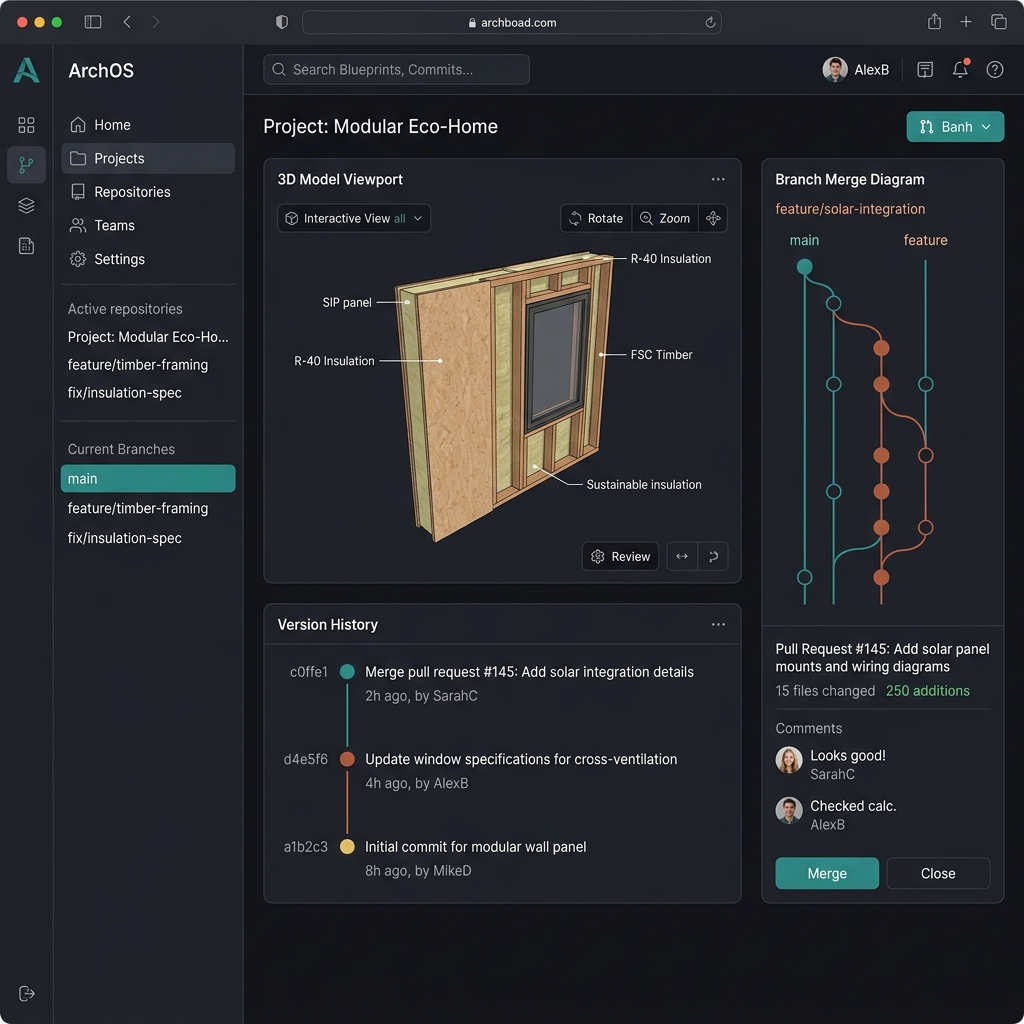
Why Version Control Matters for Structures
In proprietary architecture, a change in window size or structural thickness can take weeks of manual redrafting across floor plans, elevations, and structural calculation sheets. With modular parametric components and version control, modifications automatically propagate through the design tree, recalculating structural load distributions instantly.
Modular & Earth-First: The Physical Implementation
To translate open-source files into actual shelters, we rely on high-performance modular systems designed for decentralized production. These systems utilize locally sourced, carbon-neutral materials that can be fabricated with standard CNC routers or simple carpentry tools.
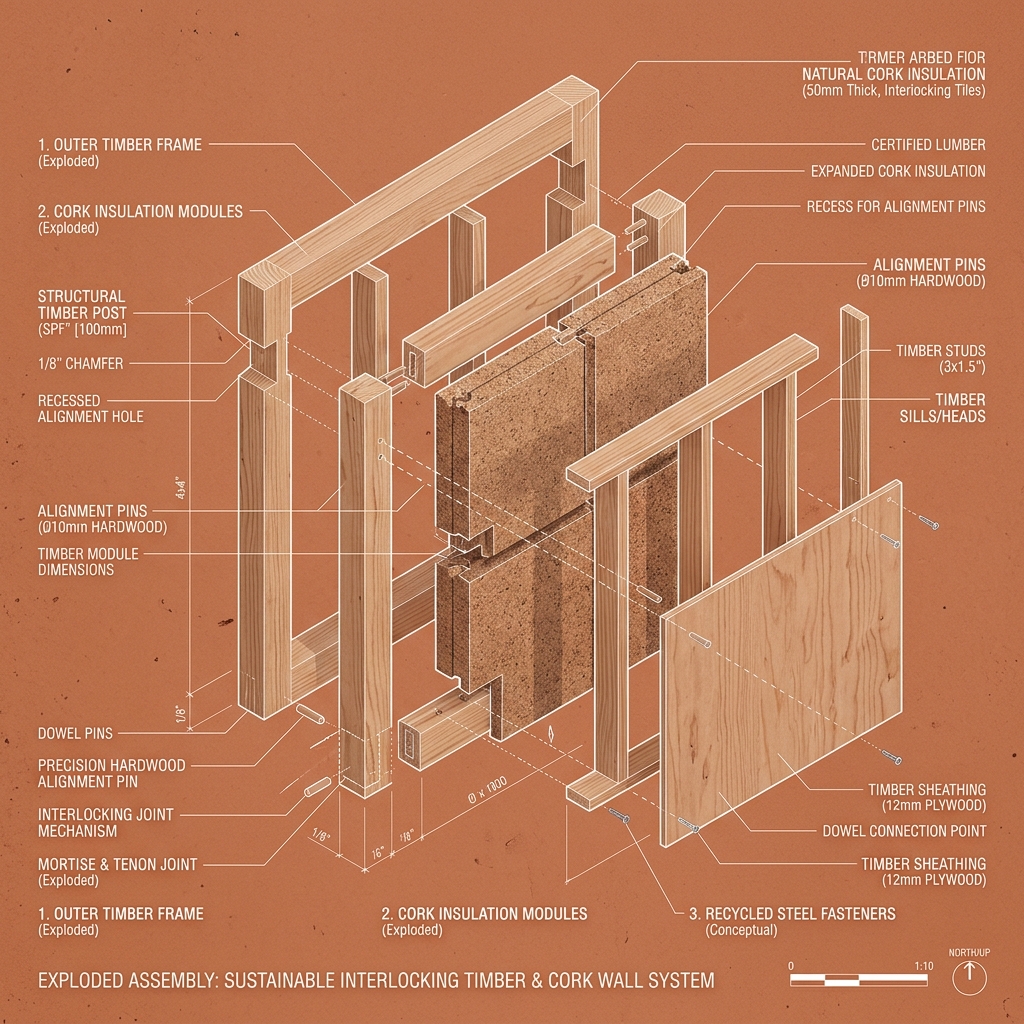
Materials and Tolerances
By standardizing tolerances and interlocking joints, communities can fabricate structures with minimal training. For example, using precise mortise-and-tenon joints combined with alignment pins eliminates the need for complex, energy-intensive hardware. Our research labs focus on three primary materials systems:
- Carbon-Negative Envelopes: Incorporating hempcrete, mycelium, or expanded cork cores to act as high-efficiency thermal insulation.
- Localized Sourcing: Designing for local soils, rammed earth, and regional timber types rather than relying on global supply chains.
- Zero-Waste Templates: Nesting CNC cutting paths dynamically to extract maximum surface area from standard sheet sizes, minimizing waste.
Open Design Schemas: Code as Construction
Modern open-source architecture defines structures using machine-readable configuration files. These files can be processed by CNC machines, 3D printers, and robotic gantries, allowing automation without central factories.
# Open Building Schema (OBS) v1.0
component: ModularWallPanel
id: ogg-wall-insulated-04
dimensions:
  width_mm: 1200
  height_mm: 2400
  thickness_mm: 250
materials:
  frame: FSC-Certified Douglas Fir (100x50mm)
  insulation: Expanded Cork Board (R-40 equivalent)
  sheathing: Exterior Plywood (12mm)
connections:
  top: MortiseTenon
  sides: AlignmentDowels-10mm
  fasteners: RecycledSteelScrews
tolerances:
  linear: +/- 0.5mm
  diagonal: +/- 1.0mm
Navigating Challenges: Safety, Code, and Liability
While the democratizing potential of open-source architecture is vast, it faces significant real-world challenges. Chief among these is the navigation of rigid municipal building codes and the question of legal liability.
Building Code Compliance
Open-source designs must undergo local engineering review. While the core blueprint may be open, structural details like foundation anchors and wind-load calculations must always be adapted to regional soils, seismic zones, and local regulations.
Conclusion: A Collaborative Blueprint for the Future
Open-source architecture is not merely a method of construction; it is a movement to decentralize ownership and restore balance to our relationship with the built environment. By publishing our formulas, CAD models, and learnings, Off Grid Green is collaborating with a global community to build a resilient, carbon-negative future.
Author
Maya Patel
Research Lead, Off Grid Green